Table of Contents
- Why Diet Still Decides Your Results
- The Four Rules That Drive Fat Loss
- How Much Protein Do You Actually Need?
- Eating Well on a GLP-1 Medication
- Hormones, Hunger, and Why Willpower Isn't the Problem
- Building a Fat-Loss Plate
- The Best Weight-Loss Recipes
- A Sample Day of Eating
- Meal Prep That Survives a Busy Week
- Mistakes That Stall Progress
- How Berkley Wellness Can Help
- Frequently Asked Questions
Why Diet Still Decides Your Results
Medication, hormones, and training all matter — but what lands on your plate is still the single largest lever in body composition. At Berkley Wellness in Breckenridge, TX, we see the same pattern repeatedly: patients who pair medical weight loss with a structured, protein-forward eating pattern keep more muscle, feel better, and hold their results long after the aggressive phase ends.
The good news is that a fat-loss diet does not need to be exotic, expensive, or joyless. It needs to be repeatable. The recipes in this guide were chosen because they are simple enough to cook on a weeknight in a small-town kitchen, and dense enough in protein and fiber to keep you full.
The Four Rules That Drive Fat Loss
Strip away the noise and nearly every effective plan comes down to four principles.
1. A modest calorie deficit. Roughly 300–500 calories below maintenance produces steady loss of about 0.5–1.5 pounds per week without wrecking your energy or muscle mass. Aggressive crash deficits backfire.
2. High protein at every meal. Protein preserves lean tissue, has the highest thermic effect of the macronutrients, and is the most satiating thing you can eat.
3. Fiber and volume. Vegetables, legumes, and fruit fill the stomach for very few calories and feed the gut bacteria that influence appetite signaling.
4. Consistency over perfection. A plan followed 85% of the time for a year beats a perfect plan abandoned in three weeks.
How Much Protein Do You Actually Need?
For most adults pursuing fat loss, we target 0.7 to 1.0 grams of protein per pound of goal body weight. For a person aiming for 170 pounds, that is roughly 120–170 grams per day, spread across three or four meals of 30–45 grams each.
Practical anchors:
- 6 oz chicken breast — about 50g
- 6 oz salmon — about 38g
- 1 cup Greek yogurt — about 22g
- 3 whole eggs — about 19g
- 1 scoop whey isolate — about 25g
- 1 cup cottage cheese — about 25g
- 1 cup lentils — about 18g
Hitting protein first tends to solve hunger, cravings, and muscle loss simultaneously.
Eating Well on a GLP-1 Medication
If you are on semaglutide or tirzepatide, appetite is no longer your limiting factor — capacity is. Small meals must be nutritionally expensive. See our complete guide to weight loss with GLP-1s for the full clinical picture.
Practical adjustments:
- Protein first, always. Eat the protein portion of the plate before anything else.
- Smaller, more frequent meals. Four 300-calorie meals often beat two large ones.
- Hydrate deliberately. Aim for 80–100 oz of water; dehydration mimics fatigue and worsens nausea.
- Limit greasy, heavy, and highly fried foods. They sit heavily when gastric emptying is slowed.
- Add fiber gradually to prevent constipation, a common side effect.
Hormones, Hunger, and Why Willpower Isn't the Problem
Insulin resistance, low testosterone, estrogen shifts during perimenopause, thyroid dysfunction, and chronically elevated cortisol all change how your body partitions calories. Two people can eat the same meals and see very different outcomes.
If you are eating well and training consistently but the scale will not move, testing is the next step, not more restriction. Our hormone therapy and testosterone therapy programs exist because metabolism is downstream of endocrine health.
Building a Fat-Loss Plate
Use this template for nearly every meal:
- Half the plate: non-starchy vegetables — broccoli, peppers, greens, asparagus, cauliflower
- A quarter of the plate: lean protein — chicken, fish, lean beef, eggs, Greek yogurt, tofu
- A quarter of the plate: high-fiber carbohydrate — quinoa, sweet potato, beans, farro, berries
- A thumb of fat: olive oil, avocado, nuts, seeds
No weighing required, and it scales up or down with your appetite.
The Best Weight-Loss Recipes
1. High-Protein Greek Yogurt Breakfast Bowl
About 380 calories · 38g protein · 5 minutes
Combine 1 cup plain nonfat Greek yogurt with 1 scoop vanilla whey, a splash of water to loosen, and stir until smooth. Top with 3/4 cup mixed berries, 1 tablespoon chia seeds, and 1 tablespoon slivered almonds. Cinnamon to taste.
Why it works: nearly 40 grams of protein with almost no cooking, and enough fiber to hold you until lunch.
2. Sheet-Pan Lemon Herb Salmon and Vegetables
About 480 calories · 40g protein · 30 minutes
Heat oven to 425°F. Place two 6 oz salmon fillets on a sheet pan with 2 cups broccoli florets, 1 cup halved cherry tomatoes, and a bundle of asparagus. Toss the vegetables with 1 tablespoon olive oil, garlic, salt, and pepper. Season the salmon with lemon zest, dill, and cracked pepper. Roast 14–16 minutes. Finish with lemon juice.
Why it works: omega-3 fats support insulin sensitivity, and the whole thing is one pan.
3. Slow-Cooker Chicken and White Bean Chili
About 410 calories · 43g protein · 10 minutes prep
Add 2 lbs chicken breast, two 15 oz cans of cannellini beans (drained), 4 cups low-sodium chicken broth, 1 diced onion, 2 cans diced green chiles, 2 tsp cumin, 1 tsp oregano, and 1 tsp chili powder to a slow cooker. Cook on low 6 hours. Shred the chicken, stir in 1/2 cup plain Greek yogurt off the heat. Serves 6.
Why it works: freezes beautifully, and the bean fiber blunts the blood sugar response.
4. Turkey and Zucchini Skillet with Feta
About 390 calories · 36g protein · 20 minutes
Brown 1 lb 93% lean ground turkey with garlic and onion. Add 2 diced zucchini, 1 diced red pepper, 1 can fire-roasted tomatoes, oregano, and paprika. Simmer 8 minutes. Off heat, crumble 2 oz feta over the top. Serves 4.
Why it works: enormous volume for the calories — the definition of a filling meal.
5. Cottage Cheese Egg Muffins
About 110 calories · 12g protein each · makes 12
Whisk 10 eggs with 1 cup cottage cheese, salt, and pepper. Fold in 2 cups chopped spinach, 1/2 cup diced bell pepper, and 1/2 cup diced onion. Divide into a greased muffin tin and bake at 350°F for 22 minutes. Refrigerate up to five days.
Why it works: the perfect small, protein-dense meal for a GLP-1 appetite.
6. Steak and Quinoa Power Bowl
About 520 calories · 45g protein · 25 minutes
Sear 6 oz sirloin to medium, rest, and slice. Build over 3/4 cup cooked quinoa with roasted sweet potato cubes, arugula, cucumber, and 1/4 avocado. Dress with lemon, olive oil, and a spoonful of Greek yogurt whisked with garlic.
Why it works: red meat supplies heme iron, zinc, and B12 — all relevant to energy and testosterone.
7. Chocolate Peanut Butter Protein Pudding
About 220 calories · 26g protein · 5 minutes
Blend 1 cup cottage cheese, 1 scoop chocolate protein powder, 1 tablespoon powdered peanut butter, and a splash of milk until completely smooth. Chill 20 minutes.
Why it works: it ends the evening craving without ending your deficit.
A Sample Day of Eating
Breakfast: Greek yogurt protein bowl — 38g protein Lunch: Turkey and zucchini skillet — 36g protein Snack: Two cottage cheese egg muffins — 24g protein Dinner: Sheet-pan salmon with vegetables — 40g protein Dessert: Chocolate protein pudding — 26g protein
Total: roughly 1,700 calories and 164 grams of protein — a comfortable deficit for most adults with more than enough protein to protect muscle.
Meal Prep That Survives a Busy Week
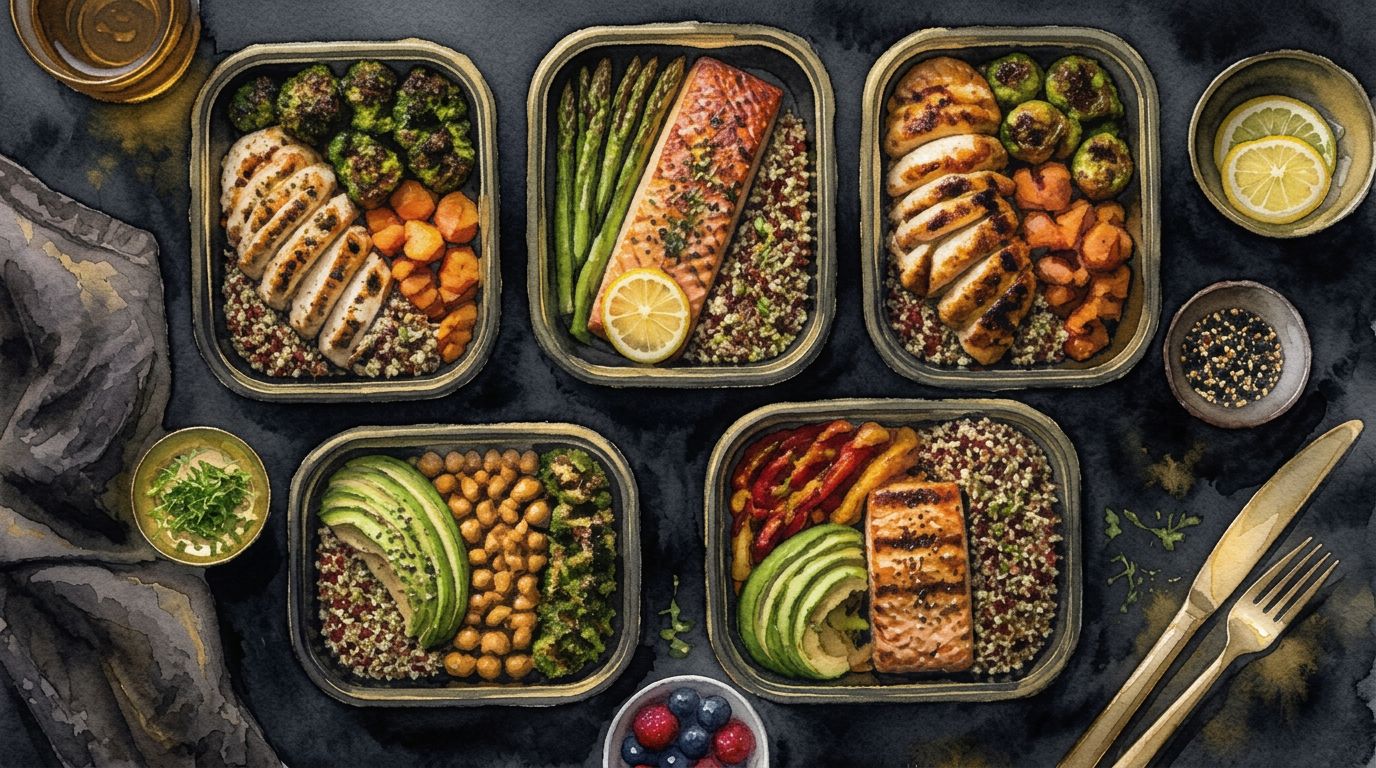
- Cook two proteins on Sunday. A tray of chicken breasts and a batch of chili covers most of the week.
- Roast one large tray of vegetables. Broccoli, peppers, and sweet potato hold well for four days.
- Portion into clear containers. What you can see, you eat.
- Keep three emergency meals in the freezer for the nights that fall apart.
- Pre-mix your protein shakes in dry form so the only step is water.
Mistakes That Stall Progress
- Drinking your calories. Sweet tea, sports drinks, and specialty coffees can quietly add 500 calories a day.
- Underestimating cooking oils. Three tablespoons of olive oil is 360 calories.
- Cutting carbs to zero. Fiber-rich carbohydrates support training performance, thyroid function, and sleep.
- Skipping resistance training. Without it, up to a quarter of the weight you lose can be muscle.
- Weighing yourself daily and panicking. Track the seven-day average, not the daily number.
- Ignoring sleep. Under six hours a night raises ghrelin and lowers leptin, making adherence far harder.
How Berkley Wellness Can Help
Cortney Berkley, DNP, FNP-C, PMHNP-BC, builds individualized plans that combine nutrition coaching with lab-guided medical care — medical weight loss with GLP-1 medications when appropriate, hormone optimization, B12 injections for energy, NAD+ therapy, and medical-grade supplements to fill the gaps a diet alone cannot.
We serve Breckenridge, Albany, Graham, Eastland, Cisco, and communities across Stephens County, with telehealth available across Texas.
Frequently Asked Questions
What is the best diet for weight loss?
The best diet is the highest-protein, highest-fiber version of a way of eating you can maintain for years. Mediterranean, lower-carb, and flexible calorie-tracking approaches all work when protein is adequate and the deficit is modest.
How many calories should I eat to lose weight?
Most adults lose steadily at 300–500 calories below maintenance, which usually lands between 1,400 and 2,000 calories per day depending on size, sex, and activity. We calculate this individually rather than guessing.
Can I lose weight without exercise?
Yes, diet drives most of the weight loss — but without resistance training a significant share of what you lose is muscle, which lowers your metabolic rate and makes regain likelier.
What should I eat while on semaglutide or tirzepatide?
Prioritize protein at every meal, keep portions small and frequent, stay well hydrated, add fiber gradually, and avoid heavy fried foods that worsen nausea.
Are carbs bad for weight loss?
No. Refined, low-fiber carbohydrates are easy to overeat, but fiber-rich carbohydrates like beans, quinoa, oats, sweet potato, and fruit support energy, digestion, and adherence.
How fast should I expect to lose weight?
A sustainable rate is 0.5 to 1.5 pounds per week, or roughly 1% of body weight. Faster loss usually means more muscle and water, not more fat.
Do I need supplements to lose weight?
Supplements are not required, but protein powder, vitamin D, magnesium, and B12 commonly correct real gaps in a calorie-restricted diet. We recommend pharmaceutical-grade products only.
When should I get my hormones tested?
If you are consistently eating well and training but the scale has not moved in eight to twelve weeks, or you also have fatigue, poor sleep, low libido, or mood changes, it is time to test.
Ready to build a plan around your labs, your schedule, and your kitchen? Book a consultation with Berkley Wellness and let's start with the plate.