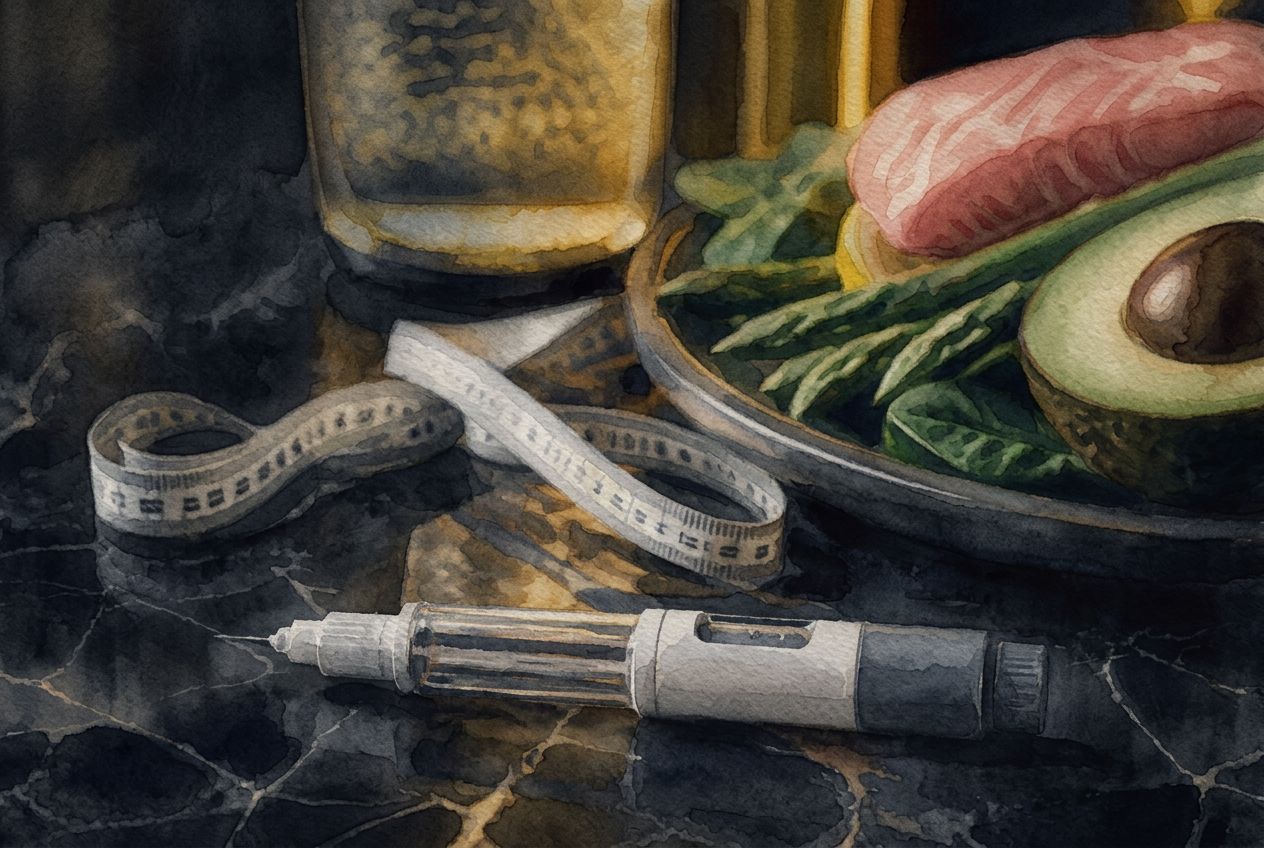
GLP-1 medications have changed medical weight loss more than any development in the last thirty years. For the first time, patients who have spent decades cycling through diets have access to a treatment that addresses the biology of appetite rather than asking them to out-willpower it. At Berkley Wellness in Breckenridge, TX, we guide patients across Stephens County and West Texas through GLP-1 therapy from first lab draw to long-term maintenance.
This guide explains exactly how GLP-1s work, what results are realistic, how dosing progresses, how to manage side effects, how to protect muscle, and how to keep the weight off.
Table of Contents
- What GLP-1 Medications Actually Are
- How GLP-1s Work in the Body
- Semaglutide vs. Tirzepatide
- Who Is a Good Candidate
- What Results to Expect Month by Month
- Dosing and Titration
- Side Effects and How We Manage Them
- Protecting Muscle While You Lose Fat
- Nutrition and Movement That Multiply Results
- Hormones, Sleep, and Stress
- Cost, Insurance, and Access
- Coming Off GLP-1s and Keeping Weight Off
- Frequently Asked Questions
What GLP-1 Medications Actually Are
GLP-1 stands for glucagon-like peptide-1, a hormone your small intestine releases after you eat. It tells your pancreas to release insulin, slows how quickly your stomach empties, and signals the appetite centers of your brain that you have had enough. In people with obesity or insulin resistance, that signaling is blunted — hunger returns quickly, fullness is faint, and cravings dominate.
GLP-1 receptor agonists are injectable medications that mimic this natural hormone with a much longer half-life, delivering a steady version of a signal your body was already designed to use.
How GLP-1s Work in the Body
Four mechanisms drive the results:
- Appetite suppression. Receptors in the hypothalamus reduce hunger drive, so smaller portions feel satisfying.
- Delayed gastric emptying. Food stays in the stomach longer, extending fullness for hours after a meal.
- Improved insulin response. Glucose-dependent insulin release lowers post-meal blood sugar spikes and the crashes that trigger cravings.
- Reduced food noise. Most patients describe this as the biggest change — the constant mental chatter about food quiets down.
That last effect is why GLP-1s succeed where dieting fails. You are not resisting hunger all day; the hunger signal itself is turned down.
Semaglutide vs. Tirzepatide
Semaglutide activates the GLP-1 receptor alone. In clinical trials, patients averaged roughly 15% total body weight loss over 68 weeks.
Tirzepatide is a dual agonist — it activates both GLP-1 and GIP receptors. The added GIP activity improves insulin sensitivity and fat metabolism, and trials showed average losses in the 20–22% range at the highest doses.
Tirzepatide is generally more powerful, but "more powerful" is not automatically "better for you." Semaglutide is often better tolerated, has a longer track record, and is frequently more affordable. We choose based on your labs, medical history, tolerance, and goals — and switching later is straightforward.
Who Is a Good Candidate
GLP-1 therapy is typically appropriate for adults with:
- A BMI of 30 or higher, or
- A BMI of 27 or higher with a weight-related condition such as prediabetes, type 2 diabetes, hypertension, sleep apnea, PCOS, or fatty liver
We do not prescribe GLP-1s to patients who are pregnant or breastfeeding, or who have a personal or family history of medullary thyroid carcinoma or MEN2. A history of pancreatitis, gastroparesis, or active gallbladder disease requires careful individual evaluation.
Every Berkley Wellness patient starts with comprehensive labs — A1c, fasting insulin, a full metabolic panel, thyroid, lipids, and hormone levels — because an untreated thyroid problem or low testosterone will quietly cap your results.
What Results to Expect Month by Month
- Weeks 1–4: Appetite drops noticeably. Weight loss is modest, often 2–6 pounds, and much of it is water. This phase is about tolerance, not speed.
- Months 2–3: As doses increase, loss settles into a steady 1–2 pounds per week. Clothes fit differently, energy improves, blood sugar stabilizes.
- Months 4–6: Most patients reach 10–15% total body weight loss. Blood pressure, A1c, and triglycerides usually improve alongside the scale.
- Months 7–12: Loss slows as your body reaches a new set point. This is normal and expected, not failure. The focus shifts to body composition and maintenance.
Faster is not better. Losing more than about 1% of body weight per week increases muscle loss, gallstone risk, and rebound.
Dosing and Titration
GLP-1s are once-weekly subcutaneous injections into the abdomen, thigh, or back of the arm — a needle small enough that most patients say it is painless.
We start low and increase every four weeks only if you are tolerating the current dose well. Rushing titration is the single most common cause of miserable side effects and abandoned treatment. There is no prize for reaching the maximum dose; the correct dose is the lowest one that keeps you losing steadily and feeling well.
Side Effects and How We Manage Them
Most side effects are gastrointestinal, dose-related, and temporary:
- Nausea — the most common. Eat smaller meals, stop at the first sign of fullness, avoid high-fat and fried foods, and stay hydrated.
- Constipation — increase fiber gradually, drink more water, add magnesium if appropriate, and move daily.
- Reflux or burping — usually improves by shrinking portions and not lying down after meals.
- Fatigue — often a sign of eating too little. Under-eating protein and calories on a GLP-1 is easy to do accidentally.
Serious reactions such as pancreatitis or gallbladder disease are uncommon but real, which is why medically supervised treatment matters. Call us for severe or persistent abdominal pain rather than waiting it out.
Protecting Muscle While You Lose Fat
On any rapid weight loss protocol, roughly 25–40% of the loss can come from lean tissue if nothing is done to prevent it. Losing muscle lowers your metabolic rate and makes regain far more likely. Our protocol:
- Protein target: roughly 0.7–1.0 grams per pound of goal body weight daily. This is non-negotiable and often difficult on a suppressed appetite — protein shakes help.
- Resistance training: two to three sessions per week. Even bodyweight work preserves meaningful lean mass.
- Adequate calories: aggressive under-eating on top of a GLP-1 accelerates muscle loss.
- Hormone assessment: low testosterone or untreated menopausal hormone decline makes muscle preservation dramatically harder.
- Micronutrient support: pharmaceutical-grade supplements and B12 injections fill the gaps that come with eating substantially less food.
Nutrition and Movement That Multiply Results
GLP-1s make the right habits easy to sustain, but they do not choose your food for you. What works:
- Protein first at every meal, then vegetables, then carbohydrates.
- Water throughout the day — dehydration mimics both hunger and fatigue.
- Limit alcohol. It adds empty calories, worsens nausea, and disrupts sleep.
- Walk daily. Ten to fifteen minutes after meals meaningfully improves glucose control.
- Lift twice weekly. This is what determines whether you finish lean or simply smaller.
Hormones, Sleep, and Stress
Weight regulation is not just calories. Poor sleep raises ghrelin and lowers leptin, driving hunger the next day. Chronic stress elevates cortisol, which promotes abdominal fat storage and insulin resistance. Thyroid dysfunction, perimenopause, and low testosterone all slow fat loss.
This is why we treat GLP-1 therapy as one part of a metabolic program rather than a standalone prescription. Patients who address hormone balance, sleep, and stress and mental health alongside their medication lose more fat, keep more muscle, and maintain results far better.
Cost, Insurance, and Access
Coverage for GLP-1s remains inconsistent. Some plans cover them for type 2 diabetes but not for weight management; others require documented prior attempts at lifestyle change. Compounded and cash-pay options have made treatment accessible to many patients whose insurance declines, and pricing varies with the medication and dose.
We review your specific options at your consultation, including the practical realities of telehealth follow-ups so you are not driving long distances for routine check-ins.
Coming Off GLP-1s and Keeping Weight Off
The hardest question in this field: what happens when you stop? Studies show significant regain when the medication is discontinued abruptly with no plan, because the underlying appetite biology returns.
Our approach is a deliberate taper combined with a maintenance strategy — protein and training habits locked in before the taper begins, gradual dose reduction rather than an abrupt stop, and a low maintenance dose for patients who need one long term. Obesity is a chronic condition, and needing ongoing treatment is no more a failure than needing ongoing blood pressure medication.
Frequently Asked Questions
How fast will I lose weight on a GLP-1? Most patients lose 1–2 pounds per week once they reach an effective dose, averaging 10–15% of total body weight within six months and up to 20%+ with tirzepatide over a year.
Is semaglutide or tirzepatide better? Tirzepatide produces greater average weight loss in trials, but semaglutide is often better tolerated and less expensive. The right choice depends on your labs, medical history, and how you respond.
Do I have to take a GLP-1 forever? Not necessarily, but obesity is a chronic condition. Some patients taper off successfully with strong habits in place; others do best on a low maintenance dose. We plan for this from day one.
Will I lose muscle on a GLP-1? You can, which is why we prescribe a high-protein target and resistance training alongside the medication and monitor body composition, not just scale weight.
What are the most common side effects? Nausea, constipation, reflux, and fatigue — nearly all dose-related and temporary. Slow titration prevents most of them.
Can I drink alcohol on a GLP-1? In moderation, but many patients find their desire for alcohol drops sharply. Alcohol worsens nausea, disrupts sleep, and stalls fat loss.
Do GLP-1s help with PCOS? Yes. By improving insulin sensitivity, GLP-1s often help with PCOS-related weight gain and can improve cycle regularity for many women.
Can I take a GLP-1 with hormone therapy? Frequently, yes — and the combination often works better than either alone, since hormone optimization helps preserve lean mass during weight loss.
Do I need labs before starting? Yes. Baseline labs identify thyroid dysfunction, insulin resistance, and hormone deficiencies that would otherwise stall your results.
How do I get started in Breckenridge? Book a consultation with Berkley Wellness. We review your history, order labs, and build a plan matched to your metabolism and goals.
Start Your GLP-1 Program at Berkley Wellness
You do not need more willpower. You need a plan built on your biology, supervised by a provider who monitors your labs, protects your muscle, and adjusts as you go. Berkley Wellness offers medically supervised GLP-1 weight loss for patients in Breckenridge, Albany, Cisco, Eastland, Graham, and across West Texas — with telehealth follow-ups so treatment fits your life.
Book a Consultation to get started.