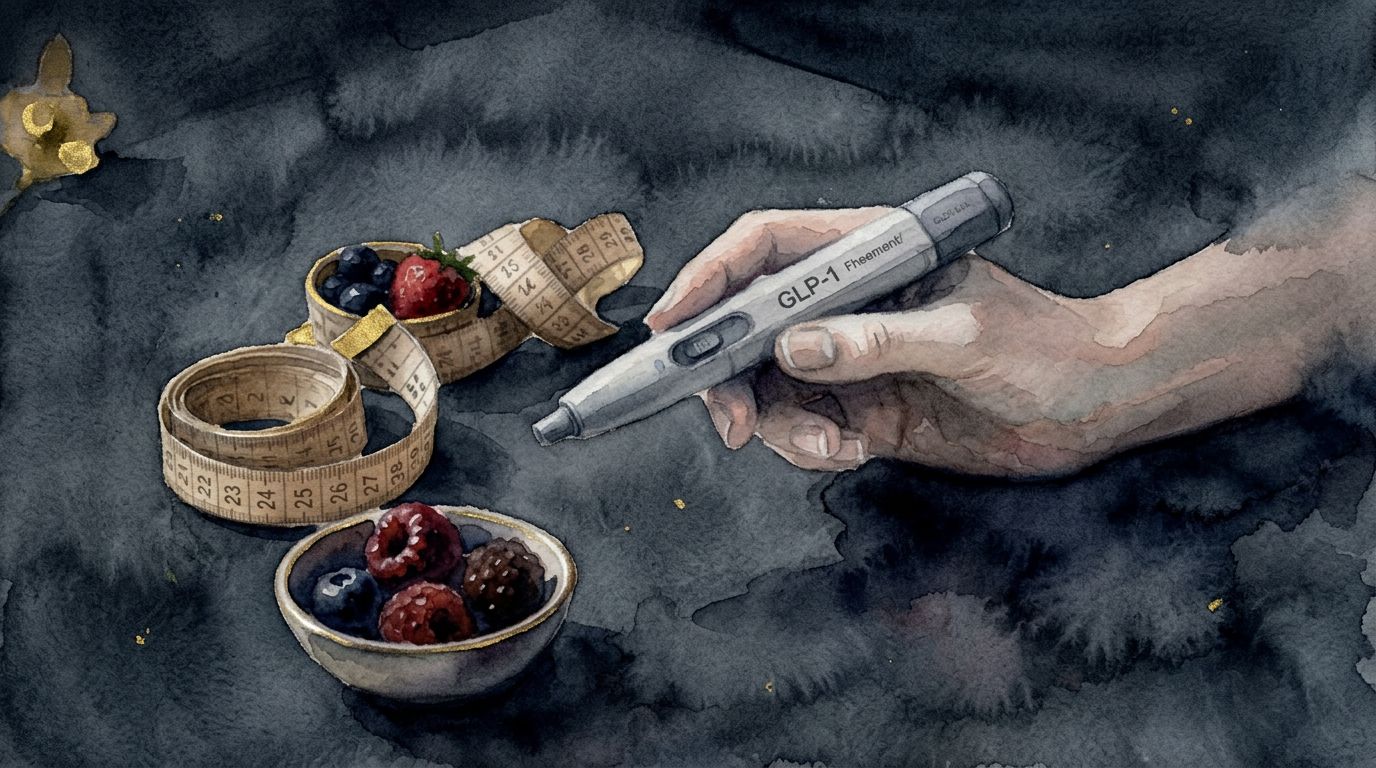
Polycystic ovary syndrome (PCOS) affects an estimated 1 in 10 women of reproductive age in the United States, and stubborn weight gain is one of its most frustrating signatures. If you have PCOS, you already know that the usual "eat less, move more" prescription rarely works the way it does for everyone else. Hormonal chaos, insulin resistance, and a sluggish metabolism conspire to make every pound feel like it took a fight to lose — and a moment of stress to put back on.
That is exactly why GLP-1 receptor agonists — medications like semaglutide (Wegovy, Ozempic) and tirzepatide (Zepbound, Mounjaro) — have become one of the most talked-about tools in PCOS care. They were not originally designed for PCOS, but they happen to target the exact metabolic machinery that drives PCOS weight gain. At Berkley Wellness in Breckenridge, TX, women living with PCOS are some of the patients who respond most dramatically to medically supervised GLP-1 therapy.
This guide explains why PCOS makes weight loss so hard, how GLP-1 medications work, what the research shows for PCOS specifically, what results to realistically expect, and how to know if this approach is right for you.
Why PCOS Causes Weight Gain in the First Place
PCOS is not simply an ovary problem — it is a whole-body metabolic and hormonal condition. Three core dysfunctions drive the weight gain:
1. Insulin resistance. Up to 70% of women with PCOS have insulin resistance, meaning their cells do not respond efficiently to insulin. The pancreas compensates by pumping out more of it. High circulating insulin tells the body to store fat (especially around the abdomen), increases hunger, and worsens cravings for refined carbohydrates.
2. Androgen excess. Insulin resistance pushes the ovaries to produce more testosterone and other androgens. Elevated androgens are responsible for many of the visible symptoms of PCOS — acne, hair growth, hair loss — and they also encourage fat storage in the midsection rather than the hips and thighs.
3. Disrupted hunger and satiety signaling. Women with PCOS often have lower levels of GLP-1, the gut hormone that tells the brain you are full. Research has consistently shown a blunted GLP-1 response after meals in PCOS, which translates to hunger that comes back too quickly and portions that never quite feel satisfying.
Add chronic low-grade inflammation, a higher rate of mood symptoms that drive emotional eating, and the fatigue that comes with hormonal imbalance, and you have a metabolic environment built to gain weight and resist losing it.
What GLP-1 Medications Actually Do
GLP-1 (glucagon-like peptide-1) is a hormone your gut naturally releases after you eat. GLP-1 medications are synthetic versions that mimic and amplify what your own body should be doing. They work in four important ways:
- They slow gastric emptying. Food stays in your stomach longer, so you feel full faster and stay full longer.
- They quiet appetite signals in the brain. Patients consistently describe a dramatic reduction in "food noise" — the constant background chatter about what to eat next.
- They improve insulin sensitivity. Cells respond to insulin more efficiently, which lowers circulating insulin levels.
- They blunt post-meal blood sugar spikes. This reduces the rollercoaster of energy and cravings that drives overeating.
For someone without PCOS, those mechanisms produce meaningful weight loss. For someone with PCOS, they directly address the exact dysfunctions causing the weight gain in the first place.
What the Research Says About GLP-1 and PCOS
The evidence supporting GLP-1 therapy for PCOS has grown substantially over the past several years.
Multiple clinical trials and meta-analyses comparing GLP-1 medications to metformin (a longtime first-line PCOS medication) have shown that GLP-1 medications produce significantly greater weight loss, larger reductions in waist circumference, and stronger improvements in insulin sensitivity. Studies of liraglutide and semaglutide in women with PCOS have reported average weight loss in the range of 5–10% of body weight, with some patients losing considerably more.
Beyond the number on the scale, the trials show several PCOS-specific benefits:
- Lower fasting insulin and improved HOMA-IR (a measure of insulin resistance)
- Reduced free testosterone and total androgen levels
- Restoration of more regular menstrual cycles
- Improved ovulation rates, with some studies showing higher pregnancy rates in women trying to conceive after GLP-1-assisted weight loss
- Reductions in markers of inflammation
In 2024 and 2025, leading endocrinology and reproductive medicine groups began formally acknowledging GLP-1 therapy as a reasonable option for women with PCOS and obesity who have not responded to lifestyle changes alone.
How Much Weight Loss Is Realistic With PCOS?
This is one of the first questions patients ask. The honest answer: results vary, but they are typically very encouraging.
In general clinical practice, patients with PCOS on semaglutide or tirzepatide tend to lose:
- 5–10% of body weight at 6 months with consistent dosing
- 10–20% of body weight at 12 months, comparable to non-PCOS patients
- A meaningful reduction in central / abdominal fat, which is the most metabolically harmful kind
Some PCOS patients do lose more slowly than non-PCOS patients in the first few months — the underlying insulin resistance has to be unwound — but they often catch up and sometimes surpass those without PCOS as the medication continues to improve metabolic function over time.
Benefits Beyond Weight Loss
For women with PCOS, GLP-1 therapy frequently delivers benefits the scale will never capture:
- More regular periods — often the first sign the medication is working hormonally, not just metabolically
- Reduced acne and unwanted hair growth as androgens normalize
- Improved fertility — many women trying to conceive find that even modest weight loss restores ovulation
- Lower long-term risk of type 2 diabetes, which women with PCOS develop at four times the average rate
- Better cholesterol and blood pressure, reducing long-term cardiovascular risk
- Improved energy and mood, partly from blood sugar stability and partly from no longer fighting hunger all day
Who Is a Good Candidate?
GLP-1 medications are not for everyone, and PCOS alone is not the deciding factor. At Berkley Wellness, candidacy is evaluated based on:
- A confirmed PCOS diagnosis or clear features of insulin resistance
- BMI typically 27 or higher, or significant metabolic markers
- No personal or family history of medullary thyroid carcinoma or MEN-2
- Not currently pregnant or actively trying to conceive in the immediate term (these medications are stopped before pregnancy)
- Willingness to combine medication with nutrition, movement, and follow-up care
A thorough lab workup — including fasting insulin, glucose, HbA1c, lipid panel, thyroid function, and androgen levels — sets the baseline so progress can be measured beyond just the scale.
What to Expect From a Medically Supervised Program
Patients sometimes assume GLP-1 therapy is "just a shot." It is not. A well-run program looks more like this:
- Initial consultation and labs. Confirming PCOS, ruling out contraindications, and establishing a metabolic baseline.
- Slow, careful dose titration. Starting at the lowest dose and increasing gradually minimizes nausea and other side effects.
- Nutrition guidance focused on protein and fiber. Because appetite is suppressed, every bite has to count — patients are coached to prioritize lean protein, vegetables, and adequate hydration.
- Resistance training emphasis. Some weight loss on GLP-1 medications comes from muscle. Strength training preserves lean mass and protects metabolic rate.
- Routine follow-up. Monthly or bimonthly check-ins to monitor weight trends, side effects, labs, and hormonal symptoms.
- A plan for what comes after. Whether the goal is long-term maintenance on a lower dose or eventual tapering, the exit strategy matters as much as the entry.
Side Effects and Honest Trade-Offs
The most common side effects are gastrointestinal: nausea, constipation, occasional diarrhea, and reflux. These usually appear early, are dose-dependent, and improve significantly within a few weeks. Slower dose escalation, smaller portions, lower-fat meals, and proper hydration almost always resolve them.
More important conversations include:
- Muscle loss risk if protein intake and resistance training are neglected
- Rebound weight gain if the medication is stopped abruptly without a transition plan
- Cost and insurance coverage, which vary widely
- Long-term use — for many PCOS patients, this is a chronic condition medication, not a 12-week fix
How GLP-1 Therapy Fits Into Broader PCOS Care
GLP-1 medications are a powerful tool, not a cure. The most successful PCOS patients use them as part of a broader approach that may include:
- A lower-glycemic, higher-protein eating pattern
- Strength training 2–4 times per week
- Sleep optimization (poor sleep dramatically worsens insulin resistance)
- Stress management, since cortisol drives both insulin resistance and androgen production
- Targeted supplementation (inositol, vitamin D, omega-3s) when labs justify it
- Bioidentical hormone support when indicated
This is the model Berkley Wellness uses — medication when it is the right tool, and the lifestyle and hormonal scaffolding that makes the medication work even better.
Frequently Asked Questions
Can GLP-1 medications really help PCOS weight gain?
Yes. Clinical research consistently shows that GLP-1 receptor agonists like semaglutide and tirzepatide produce meaningful weight loss, improved insulin sensitivity, and lower androgen levels in women with PCOS — often outperforming metformin and lifestyle changes alone.
How much weight can I expect to lose with PCOS on a GLP-1?
Most patients with PCOS lose 5–10% of body weight in the first six months and 10–20% at one year, with significant reductions in abdominal fat. Results depend on dose, consistency, lifestyle factors, and individual metabolism.
Will GLP-1 medications help my periods become more regular?
Often, yes. As insulin and androgen levels improve with weight loss, many women with PCOS see more regular cycles, sometimes within a few months of starting therapy.
Can GLP-1 medications improve PCOS-related infertility?
Indirectly, yes. By reducing insulin resistance and helping restore ovulation, GLP-1 therapy can improve fertility. However, these medications must be stopped before conception, so timing with your provider is essential.
Is metformin or a GLP-1 better for PCOS?
For weight loss and metabolic improvement, GLP-1 medications generally outperform metformin in head-to-head studies. Some patients benefit from using both together, depending on their specific labs and goals.
What are the most common side effects?
Nausea, constipation, mild diarrhea, and reflux are the most common, especially in the first weeks. Slow dose increases and dietary adjustments almost always resolve them.
Do I have to take a GLP-1 forever?
PCOS is a chronic condition, and many patients stay on a long-term maintenance dose. Some transition off after reaching their goal, but a structured taper and continued lifestyle support are essential to avoid rebound.
Can I do GLP-1 therapy locally in Breckenridge, TX?
Yes. Berkley Wellness in Breckenridge offers medically supervised GLP-1 programs for women with PCOS, including full lab workups, dose titration, nutrition coaching, and ongoing follow-up.
The Bottom Line
PCOS weight gain is not a willpower problem — it is a hormonal and metabolic problem. GLP-1 medications work because they directly address the insulin resistance, appetite dysregulation, and androgen imbalance that drive PCOS in the first place. For the right patient, in a medically supervised program, they can be genuinely life-changing — not just for the number on the scale, but for periods, fertility, energy, and long-term health.
If you are in Breckenridge, Stephens County, or anywhere in West Texas and you are tired of fighting PCOS weight gain alone, schedule a consultation at Berkley Wellness to find out if GLP-1 therapy is the right next step for you.